
What's a Unit Study?
My take on unit studies based on the words of Leonardo da Vinci

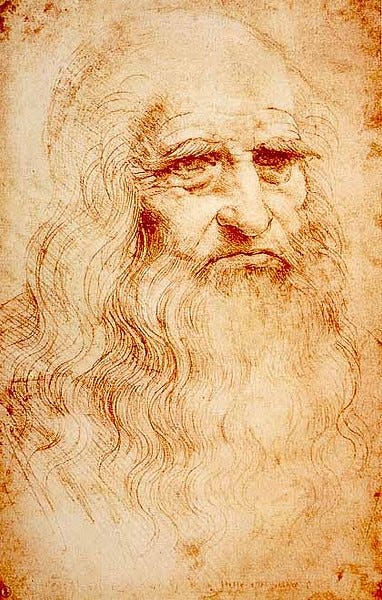
If you’ve been around long enough, you know I love unit studies. But what exactly is a unit study? That phrase gets thrown around every which way and is used differently by different people. Is it just a focus on one broad subject like history or science? Or maybe it’s a deep dive into one topic from any different angles? Is it another way to offer a feast of a wide variety of subjects? I’ve seen unit studies described as all of above but I think each version minimizes how much you can actually do with a true definition of unit study. So how do I define it? I take my definition from the father of unit studies, a historical figure you’ve probably heard a little something about, Leonardo da Vinci.
“To develop a complete mind: Study the science of art. Study the art of science. Learn how to see. Realize that everything connects to everything else.” - Leonardo da Vinci
Though da Vinci doesn’t use the modern term “unit study” to describe this style of learning, it sounds an awful lot like a unit study, doesn’t it? In fact, he simply called it “the development of a complete mind.” Studying, learning to see, and realizing that everything connects to everything else thereby taking a wholistic approach to education.
In learning through this wholistic style, we’re developing our ability to see the whole and make connections within. Show me a historical time period that doesn’t include science, art, literature, food and culture, geography, politics, or any other topic you can imagine. So why not study them all, at the same time, as they relate to each other, in order to understand the influence and impact from one thing to another. If Leonardo da Vinci subscribes to this kind of development, who am I to disagree?
A unit study can focus on a broad topic like history or science but it also integrates other subjects. It can be a deep dive into a topic and seen from different angles while making connections to other subjects. A unit study involves a wide variety of subjects as a feast, but in a way that allows for more depth and understanding and not just fragmented subjects.
What is a unit study?
A unit study is an integrated method of learning that centers on a topic while weaving together as many subjects as possible in a holistic approach to learning. It allows curiosity and exploration in depth while learning to see the bigger picture, and makes connections across subjects.
What does that actually look like?
Let’s take the topic of the French Revolution.
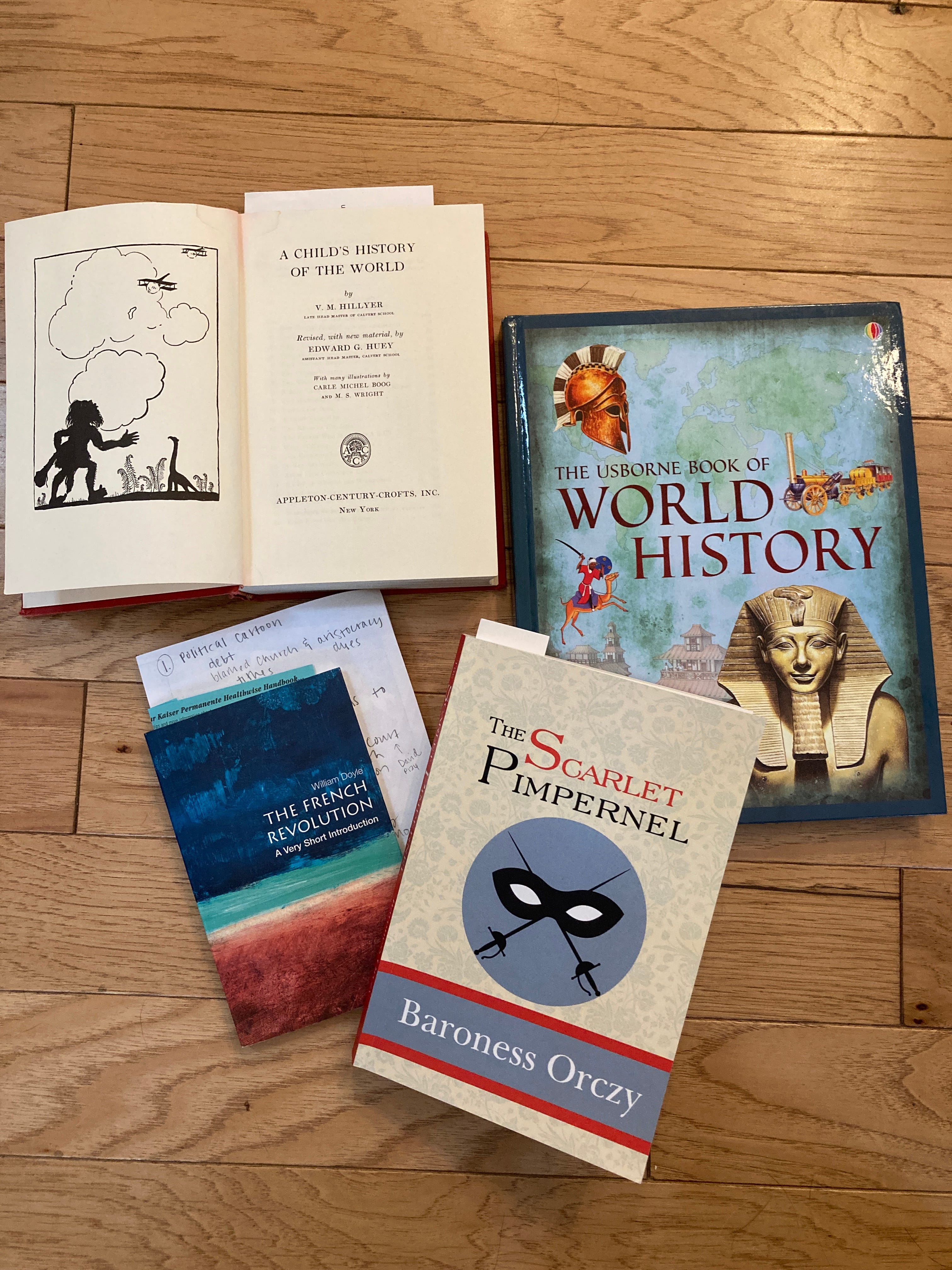
What historical events inspired the French Revolution? (International relations—American Revolution.) What was the state of France before the French Revolution? (Government, sociology.) Learn about key historical figures, social classes, politics, timeline of events, the role of women, etc. (Perhaps add food and cooking and feast on fish and bread.) And while we’re discussing bread, how much did a loaf of bread cost during this period? (Economics) Perhaps play the game, Mystic Market, to understand how markets work.
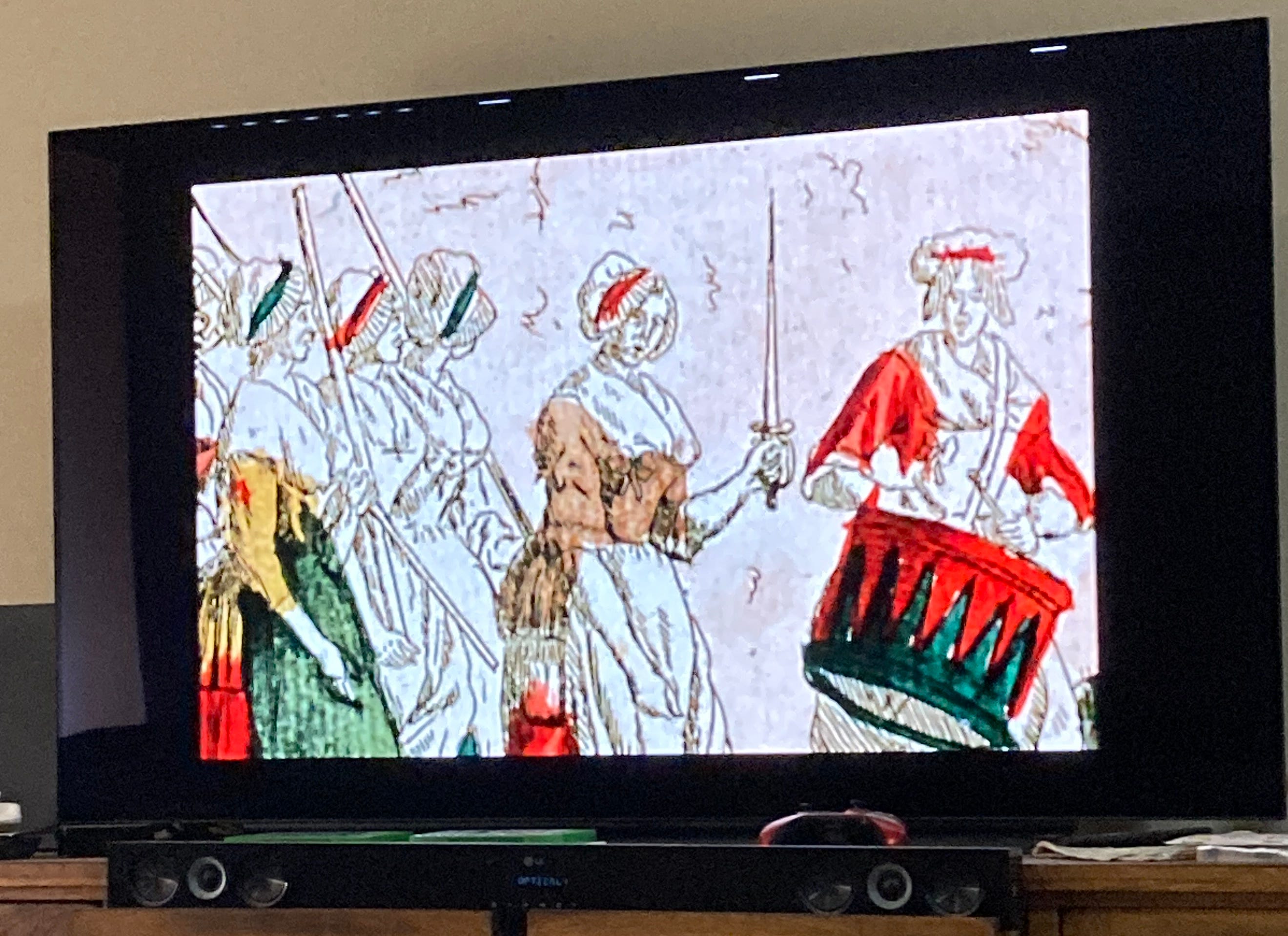
What other groups of people participated in the revolution? Writers, philosophers, and scientists of the day were influenced by the Enlightenment and the discoveries of the Scientific Revolution. When you look at themes of the French Revolution, you can trace origins of thinking back to those eras thus including subjects such as philosophy, science, and sociology. Read excerpts of primary documents (history/LA.)
But how do we know what the French Revolution looked like? Aside from written accounts, we have artists like Jacques-Louis David (artist study.) He painted so many of the famous events that he didn’t even finish some of them because life was changing so quickly there wasn’t time before something new happened. (History affecting art.) How did his art influence the Revolution? It was used as propaganda to stir up fervor and became political activism leading to the execution of many on the guillotine. (Art history—art influencing history.)
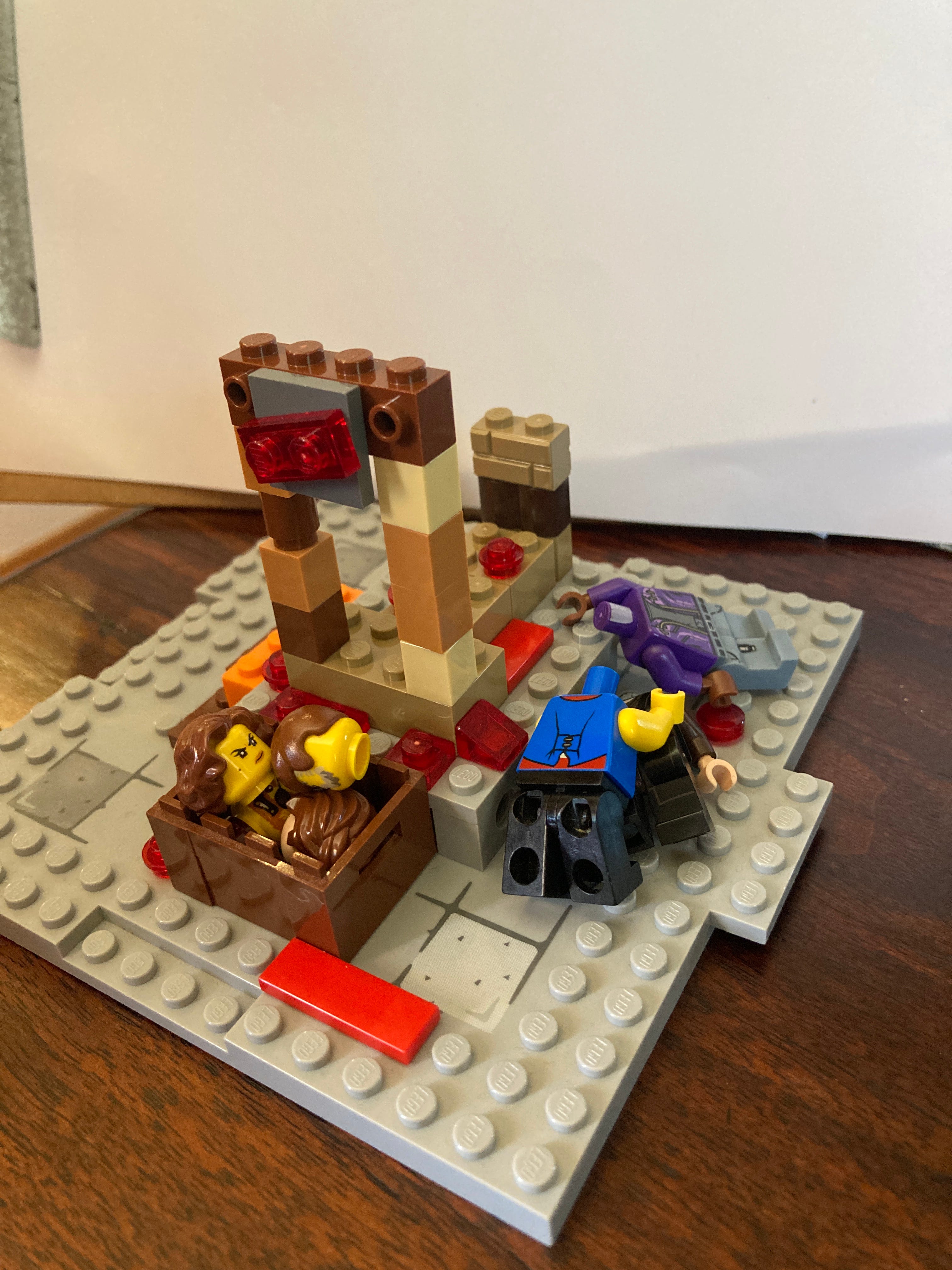
And then we come to the guillotine, it became the standard and preferred method of execution. How did it work? Look at the physics of the guillotine: energy, momentum, gravity, pulleys, and levers. Depending on how in depth you choose to dive, add in math with appropriate formulas. Why was it so effective? How long was it used? (Science and math.)
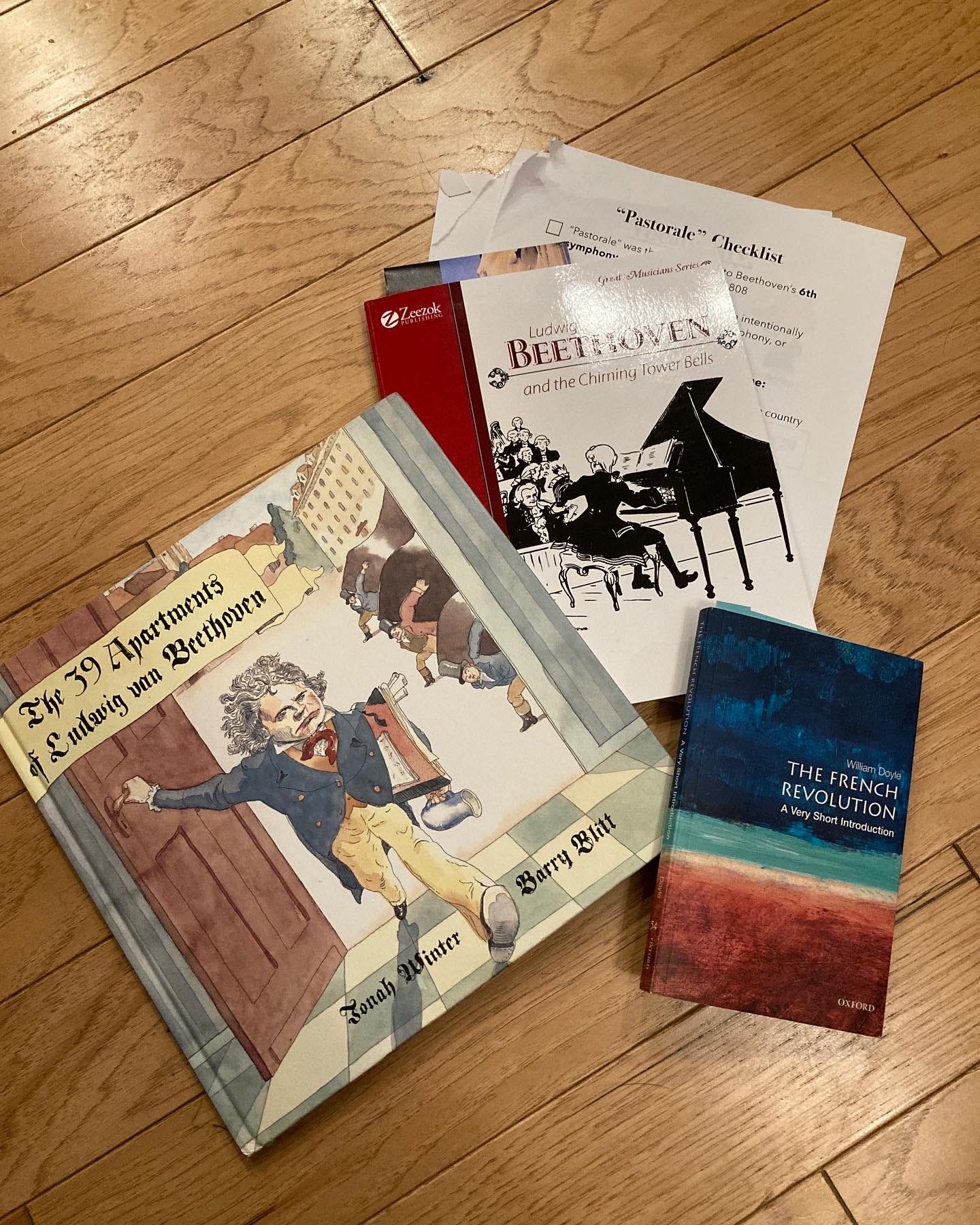
Before we leave the French Revolution, we must look at the aftermath. Where did it lead? Who did it influence? One such person who was profoundly influenced by the ideals of the French Revolution was composer, Ludwig van Beethoven. (Music!) Listen to his music and study how Beethoven revolutionized music by including intense emotion, drama, and structural innovation. (Composer study!) Try to go to a concert in-person to hear the emotion of his music. Another example of someone influenced by the revolution is Napoleon. He benefited post-revolution which led to another consequential period in European history. Study the relationship between Napoleon and Beethoven (how one influences the other.) And just where did all of this take place and how did it affect the rest of Europe? (Geography and geopolitics.)
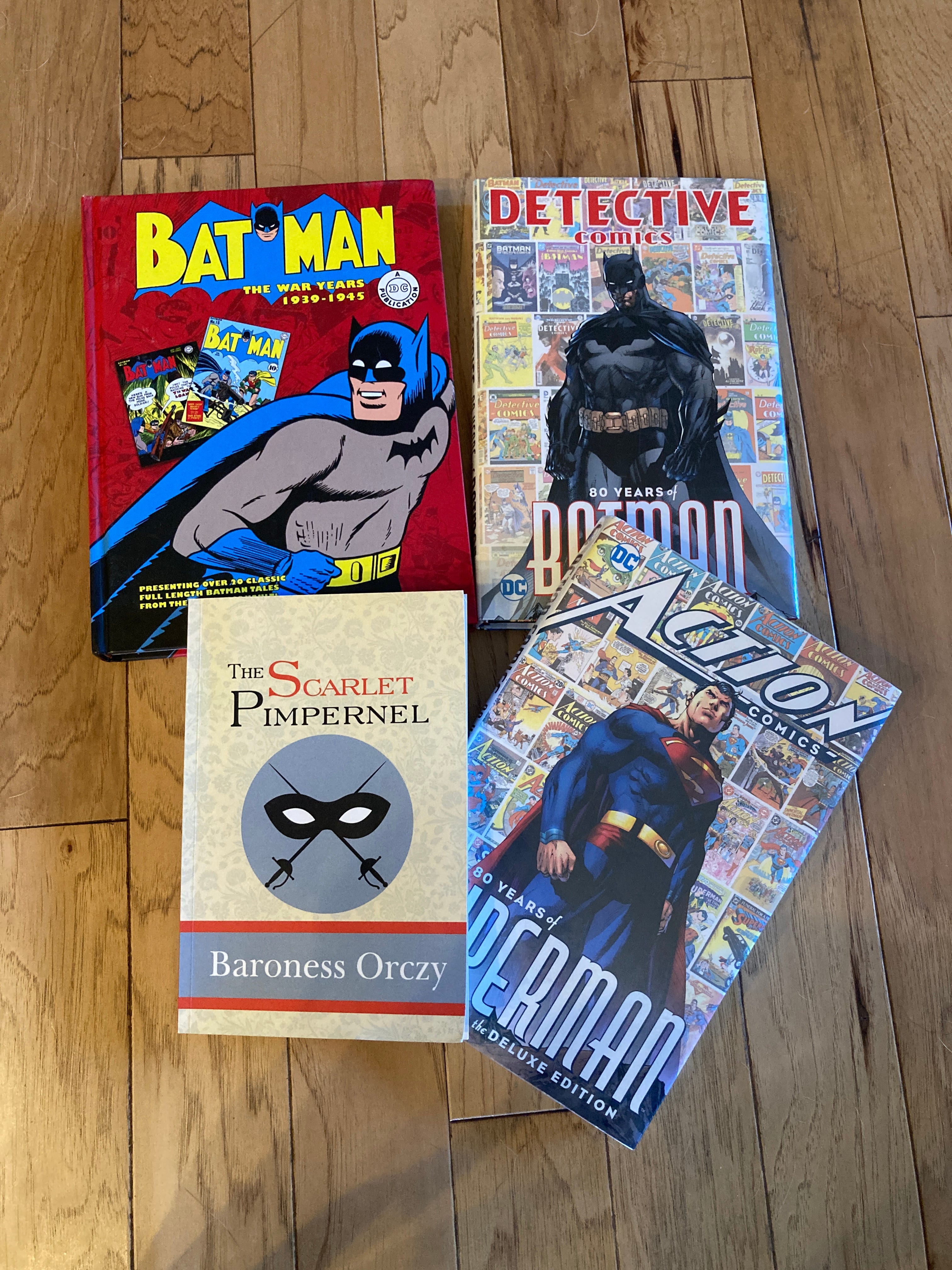
Read The Scarlet Pimpernel aloud and discuss point of view, dual identity and the secret identity trope, author’s bias, descriptive language, hooks, and more! Dive deeper with copywork and vocabulary. Compare The Scarlet Pimpernel to modern comic book heroes who have secret identities. Maybe write your own secret identity story or comic book. (Language Arts/English.)
Need more? Listen to the Broadway musical, The Scarlet Pimpernel (theater, performing arts, music, and more LA/English) and watch the 1982 movie (film studies.)
You can even add in the video game, Assassin’s Creed Unity, and see how much you recognize from your studies.
One topic. Many subjects.
It’s just as da Vinci said: Learn to see how one thing connects with the rest. Follow the rabbit trail because nothing exists in isolation.
Now here’s where it gets good. Here’s the super power of the unit study: the learning sticks. By contextualizing learning and understanding how each subjects fits with each other and into the real world, the brain remembers more. I’ve seen this in my own children and even now they reference unit studies from years ago surprising me by how much they remember. They see the connections, understand them, and apply their learning in different situations.
A bonus of unit studies is how they work so well for family learning with multiple children and ages. You can keep everyone together and teach a slew of subjects at the same time. Add in hands-on learning or projects, expecting each child to work to their ability on the same assignment. Create shared memories around your studies that they will truly remember for years to come not only in relation to their learning but just because it was so much fun and they have fond memories of it.
Unit studies have changed a bit in high school but we still manage to hold fast to some subjects which we group together in a unit. This works really well with interest-led learning. My oldest had a unit study on a topic he was interested in and earned three credits for English, History, and an elective. This year, we are weaving together American Literature + Comp, American History, and Civics for 3 credits. More important than the credits is their understanding of how each subject influences and reflects the others. My understanding of each has grown exponentially and I marvel at why we don’t teach this way more often so as to give greater knowledge of of the whole and not just separated subjects.
Yes, I love unit studies. They are one of the most delightful aspects of homeschooling my children. A chance to see the world, both the big picture and zoomed in up close, and spend time following rabbit trails, connections, and interests while covering a so many subjects and practicing necessary skills. Unit studies help us to make connections between disciplines, across time periods, and most importantly, with one another—both in how we see ourselves in relation to the world and in our family dynamics.
I want to develop a complete mind. I want my children to develop a complete mind. So we study the science of art and the art of science. We learn how to see and realize that everything connects to everything else. And if that style of education worked for one of the most brilliant men of history, then it’ll work in our homeschool.